
When a brand entrusts the manufacturing of its cosmetics to a CDMO/OEM, it is not just outsourcing a production phase. It is placing the quality, safety, consistency, and, ultimately, part of its brand’s reputation in the hands of that manufacturer.
That is why concepts such as cosmetic GMP and ISO 22716 are not merely technical requirements. They are indicators of how a laboratory operates, what controls it implements, and its ability to consistently reproduce a product with guaranteed quality in every batch manufactured.
But regulatory compliance is only the starting point. A true culture of quality is also reflected in the high standards applied to the management of facilities and processes.
What are GMPs in the cosmetics industry?
GMP, or Good Manufacturing Practices, is a set of principles designed to ensure that products are manufactured and monitored consistently and under appropriate quality conditions.
In the European Union, Regulation (EC) No. 1223/2009 stipulates that the manufacture of cosmetic products must comply with good manufacturing practices.
These regulations affect areas such as:
- Staff and Responsibilities
- facilities and equipment
- raw materials
- production
- quality control
- storage
- documentation
- incident management
- traceability
For a brand, working with a manufacturer that properly implements GMPs means reducing risks and ensuring more controlled and safer processes.
What is the ISO 22716 standard?
ISO 22716 is the international standard for Good Manufacturing Practices for cosmetic products.
It establishes guidelines regarding the production, control, storage, and shipment of cosmetics and enables the application of general quality principles to specific, systematic procedures within the manufacturing process.
For a brand, working with processes aligned with ISO 22716 provides a clear framework for controlling how its product is manufactured, documented, and managed.
GMP and ISO 22716: Are They the Same Thing?
Not exactly.
GMP refers to the general concept of Good Manufacturing Practices.
ISO 22716 provides international guidance specifically developed to implement these best practices in the cosmetics industry.
For a brand, rather than simply memorizing this distinction, what matters most is verifying that its manufacturer has a robust, documented work system that is actually implemented on the production floor.
What does it mean to manufacture cosmetics in accordance with GMP and ISO 22716?
It involves monitoring quality throughout the entire process, not just analyzing the finished product.
A properly managed manufacturing process must take into account, among other things:
Raw Materials
Identification, receipt, storage, and inspection prior to their use in production.
Manufacturing Process
Defined procedures, appropriate equipment, and monitoring of critical parameters.
Finished product
Controls to verify that the lot meets the established specifications prior to its release.
Documentation and Traceability
Records that provide information on which raw materials, processes, and controls were involved in each batch.
Storage and Shipping
Appropriate conditions to preserve the product’s characteristics until it leaves the facility.
So far, we’ve been talking about the expected standard.
But there is another aspect of quality that, although much more difficult to convey through a certificate, is immediately apparent when you walk into a manufacturing plant.
Hygiene and environmental control in accordance with the highest standards
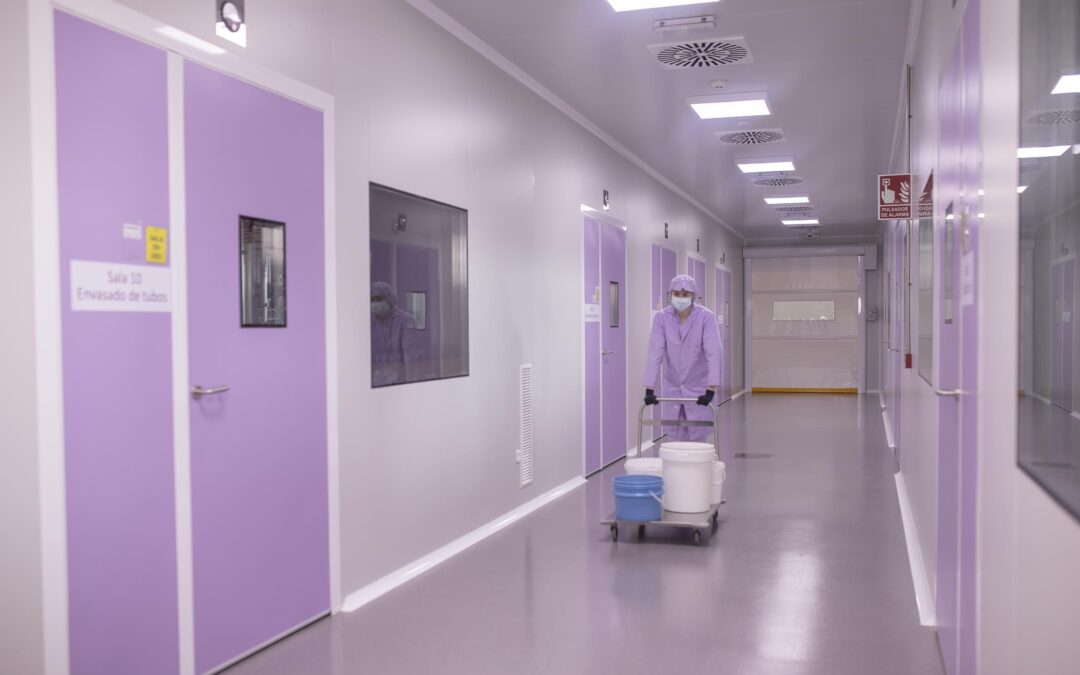
At Carmado Labs, the level of organization and cleanliness at the facility is one of the aspects that most impresses the brands and customers who visit our facilities.
But behind that visual impression lies something much more important: procedures, discipline, high standards, and daily oversight.
Thorough hygiene is an integral part of our manufacturing philosophy and the quality system built around it—not merely a one-time measure taken before an audit or a visit.
Facilities and equipment subject to rigorous procedures
Manufacturing areas and equipment are maintained under the cleanliness standards established within our GMP system.
The equipment used in production undergoes thorough cleaning procedures for both the facilities and the machinery, and the equipment is kept calibrated to ensure that each production run takes place under highly controlled conditions as part of the requirements enforced at the plant.
Documented, controlled, and supervised cleaning
In a GMP environment, cleaning does not simply mean that a surface looks clean.
Processes must follow rigorous procedures, with clearly defined responsibilities and records that allow for verification that operations have been carried out correctly.
At Carmado Labs, manufacturing controls and results are documented through procedures and records, ensuring the reproducibility and traceability of each batch.
Staff trained to work in accordance with Good Manufacturing Practices (GMP)
Maintaining a clean environment also depends on how the team works.
Our operators receive training in Good Manufacturing Practices so that guidelines for hygiene, handling, organization, and quality control are an integral part of our regular production operations.
Steps to Avoid Errors and Contamination
Keeping track of raw materials, supplies, equipment, and documentation makes it possible to identify exactly what is being used in each production run, maintain traceability, and reduce the risk of errors, mix-ups, or contamination during the process.
For us, organization is another tool for quality control at every step of the process: from the receipt of raw materials to the shipment of the finished product.
Continuous system verification
The high standards continue even after a cleaning is complete.
We conduct periodic internal reviews and audits to identify deviations and opportunities for improvement, and we document the various stages of the process to ensure traceability from raw materials to the finished product.
A difference you notice as soon as you enter the floor
Certifications such as GMP and ISO 22716 serve as proof that a system is in place.
But when a client walks into Carmado Labs, they can see how that system plays out in practice: well-maintained facilities, properly managed equipment, organized work areas, and a commitment to operational discipline in day-to-day operations.
Cleanliness is the visible result of the high standards we set for ourselves.
A requirement that goes beyond mere compliance
Compliance with GMP and ISO 22716 is essential.
But at Carmado Labs, we understand that operational excellence isn’t just about meeting the minimum requirements to comply with a standard.
It involves incorporating that requirement into our usual way of working.
For this reason, the level of hygiene and quality control at our facilities is not considered merely an added benefit to quality. It is an integral part of quality, just as our philosophy of excellence in manufacturing is.
Every room, every piece of equipment, and every stage of the process is managed according to hygiene, organizational, and control criteria designed to minimize risks, preserve product integrity, and maintain a manufacturing environment that meets the quality standards we require for every product development.
Traceability: Monitoring Each Batch from Start to Finish
Traceability makes it possible to reconstruct the information associated with a product and its manufacturing process.
For a brand, this means being able to link a batch to factors such as the raw materials used, production records, and the inspections performed.
Robust traceability facilitates incident management and provides an additional level of security and control.
Quality Control During Manufacturing
Cosmetic quality control should not be limited solely to the end of the process.
Rigorous management involves controls at various stages:
- Receipt and inspection of raw materials
- production checks
- inspection of the finished product
- document review
- release of the lot
The goal is to detect potential deviations as early as possible and ensure that the final product meets the defined specifications.
What questions should a brand ask its cosmetics manufacturer?
Before choosing a lab, it’s a good idea to look beyond price, MOQ, or lead time.
Some useful questions are:
- Do you operate in accordance with Good Manufacturing Practices (GMP)?
- How is ISO 22716 implemented?
- How do you monitor raw materials?
- What checks do you perform during manufacturing?
- How do you manage the traceability of each batch?
- What procedure do you follow to release the finished product?
- How do you manage the cleanliness, hygiene, and organization of the facilities?
- Can they show you the plant where your product will be manufactured?
This last question can provide much more information than it seems.
Your manufacturer’s quality also protects your brand
When a consumer uses a cosmetic product, they don’t see the laboratory behind it.
Check the brand name on the package.
That is why any deviation in quality ultimately has a direct impact on the company that sells that product.
Choosing a manufacturer with robust quality systems means protecting:
- product safety
- consistency between batches
- consumer confidence
- Relationships with distributors and professionals
- the brand’s reputation
At Carmado Labs, we view quality as a culture that permeates the entire process: from the selection of raw materials to manufacturing, quality control, traceability, and the release of the final product.
Manufacturing well isn’t just about meeting a standard. It’s about working every day to the highest standards required by the product that will bear our clients’ names.